Understanding Frontend, Backend, and Fullstack in the Developer World
As technology advances, the web has become increasingly complex. This has led to developers becoming more specialized. Today, a developer doesn’t necessarily handle the entire process of building a website but focuses on a specific area, such as a particular programming language, framework, or technical component.
Have you ever seen job postings for Frontend, Backend, or Fullstack developers? Let’s dive into what these terms actually mean.
Frontend
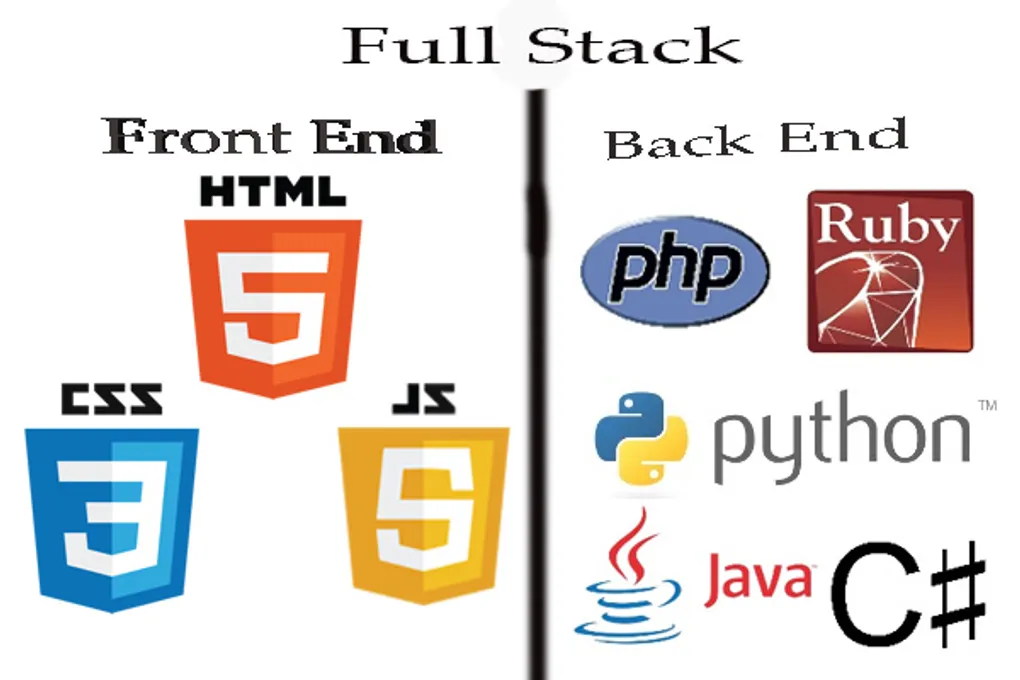
The Frontend of a website is the part that users see and interact with directly. It is built primarily using HTML, CSS, and JavaScript.
In the past (around 2012), many browsers struggled with complex JavaScript, so it was used sparingly. However, modern browsers are now highly sophisticated, enabling JavaScript to handle much more than just simple interactivity. With frameworks like Angular, jQuery, and Node.js, the definition of “Frontend” has expanded rapidly.
- HTML (HyperText Markup Language): The backbone of the web. It defines the structure and content of the site.
- CSS (Cascading Style Sheets): Controls the visual presentation—colors, fonts, backgrounds, and layout.
- JavaScript: The engine that brings a site to life with interactivity and complex animations, even allowing for full-featured web applications.
Frontend developers take designs and turn them into functional code using these three pillars.
Backend
Backend development refers to what happens “behind the scenes.” While users don’t see it, it’s what makes the website functional and dynamic. Common backend languages include PHP, Ruby, Python, and many others.
Backend developers work closely with frontend developers to ensure everything runs smoothly. Many tasks—such as complex content management systems—cannot be handled by JavaScript alone and require the power of a backend language.
Interestingly, you’ll rarely see a job post simply for a “Backend Developer.” Companies usually search for more specific roles like “Ruby Developer” or “PHP Developer.”
Fullstack
Fullstack developers work on both the frontend and the backend. They are proficient in HTML, CSS, and JavaScript, as well as one or more backend languages.
As the line between frontend and backend development blurs, fullstack developers are becoming increasingly valuable. Being able to analyze problems across both ends of the stack makes you highly adaptable in the eyes of any tech company.
However, being a fullstack developer doesn’t mean you have to do everything yourself. Most still specialize in certain areas but have the breadth of knowledge to troubleshoot the entire application. They are especially common in freelance work or as solo developers on smaller projects.
The most exciting part of web development is its constant evolution. What we define as “Frontend” or “Backend” today could change drastically in the next few years. Mastering both will keep you versatile and future-ready.
Happy programming!